
Deep breathing exercises for nervousness are one of the fastest, most accessible ways to calm your body when anxiety spikes. Your breathing pattern directly controls your nervous system—shallow chest breathing keeps you in fight-or-flight mode, while slow diaphragmatic breathing activates the calming parasympathetic response within 60 to 90 seconds. When nervousness hits, the physical sensations can feel overwhelming: racing heart, tight chest, dizzy head, tingling fingers.
What most people don’t realize is that you can reverse those sensations by changing how you breathe. Right here, right now.
Here’s the thing. You’ve probably been told to “just breathe” a hundred times and it felt useless. That’s because most people breathe wrong when they’re nervous—short, quick gasps from the upper chest that actually make things worse. The techniques in this article are different.
They’re specific, structured, and backed by how your nervous system actually works. Whether your nervousness is situational—before a presentation, during a social event—or part of a broader pattern of anxiety and panic, the right breathing exercise can give you back a sense of control in minutes.
Let’s be honest: living with unpredictable waves of nervousness is exhausting. You deserve tools that work when you need them most. These seven deep breathing exercises for nervousness are exactly that—portable, zero-cost, and effective whether you’re at home, at work, or anywhere in between.
Why Deep Breathing Exercises for Nervousness Work
Your autonomic nervous system has two branches: the sympathetic (fight-or-flight) and the parasympathetic (rest-and-digest). Nervousness and panic are driven by an overactive sympathetic response—your brain perceives a threat, real or imagined, and floods your body with adrenaline and cortisol. Your heart pounds, your breathing becomes fast and shallow, and your muscles tense.
Deep breathing exercises for nervousness work because they directly activate the vagus nerve, the main highway of the parasympathetic system. Research from Harvard Medical School shows that slow, controlled breathing at a rate of 4 to 6 breaths per minute—compared to the typical 12 to 20—triggers a measurable drop in heart rate and blood pressure within two minutes (Harvard Health Publishing, 2023). This isn’t just “relaxing”—it’s a physiological override of the stress response.
A 2017 meta-analysis published in Frontiers in Human Neuroscience reviewed 15 studies on paced breathing and found consistent reductions in self-reported anxiety, cortisol levels, and heart rate variability across all populations studied. The mechanism is straightforward: slow exhalation stimulates the vagus nerve, which releases acetylcholine—a neurotransmitter that slows heart rate and signals safety to the brain. The longer your exhale relative to your inhale, the stronger this calming signal.
For a deeper understanding of how your body responds to panic and why these techniques matter, see our detailed overview.
7 Deep Breathing Exercises for Nervousness That Actually Work
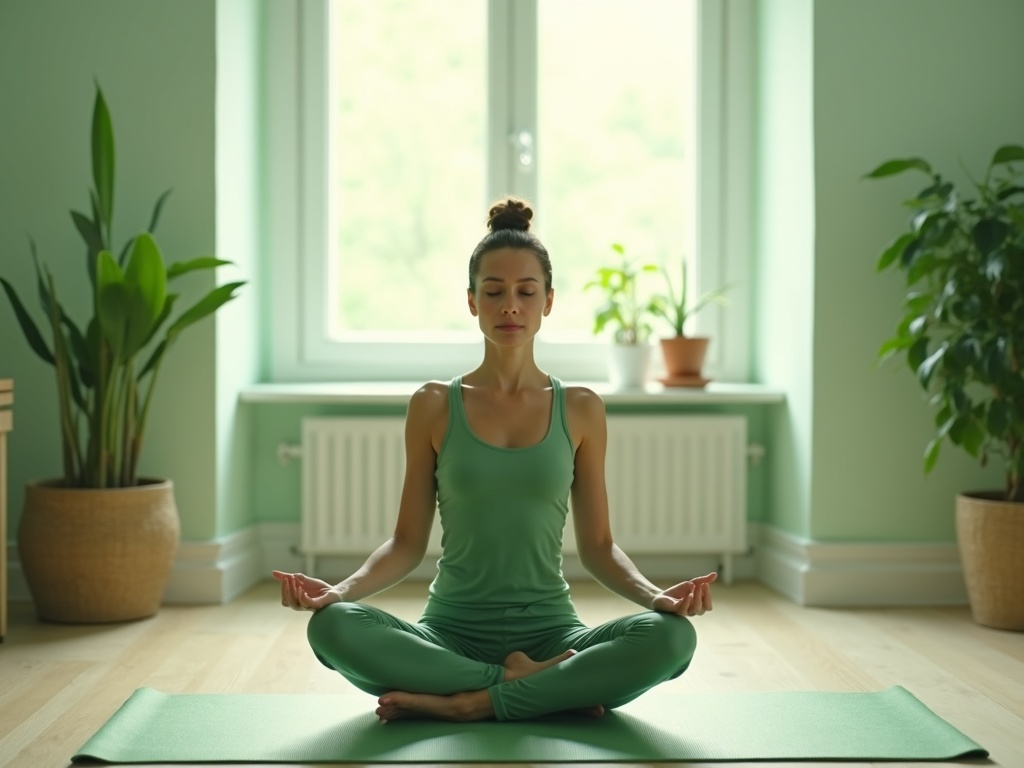
These seven techniques are ordered from quickest to apply (great for moments when nervousness hits without warning) to more structured practices (ideal for daily nervous system training). Each one has been selected because it targets a specific aspect of the nervousness response—whether that’s a racing heart, shallow breathing, or the mental spiral that follows physical symptoms.
1. The 4-7-8 Technique (Dr. Andrew Weil)
The 4-7-8 method is the gold standard for rapid nervousness relief. Developed by integrative medicine physician Dr. Andrew Weil, it forces an extended exhale that maximally stimulates the vagus nerve. This is the technique to reach for when nervousness hits hard and fast—it begins lowering heart rate within 60 seconds.
How to do it:
- Exhale completely through your mouth, making a whoosh sound
- Close your mouth and inhale quietly through your nose for 4 counts
- Hold your breath for 7 counts
- Exhale completely through your mouth for 8 counts, making a whoosh sound
- Repeat for 4 breath cycles
The extended exhale is the key—eight counts of exhalation against four counts of inhalation creates a 2:1 exhale-to-inhale ratio. This pattern tells your nervous system: “The threat is over. It’s safe to calm down now.”
2. Box Breathing (Navy SEAL Technique)
Box breathing, also called square breathing, is used by Navy SEALs to maintain focus and composure in high-stress situations. It’s especially useful when nervousness comes with racing thoughts—the counting structure gives your mind something to anchor to while the slow breathing calms your body.
How to do it:
- Inhale through your nose for 4 counts
- Hold your breath for 4 counts
- Exhale through your mouth for 4 counts
- Hold empty for 4 counts
- Repeat for 5 to 10 cycles
The equal-length phases create a stabilizing rhythm that can pull you out of the chaotic feeling of nervousness. Try this one sitting at your desk or pulled over in your car before a stressful meeting—it’s subtle enough that no one around you will notice.
3. Diaphragmatic Breathing (Belly Breathing)
Most people with chronic nervousness breathe almost exclusively from their upper chest—short, shallow breaths that keep the sympathetic nervous system activated. Diaphragmatic breathing retrains your body to use the full capacity of your lungs, engaging the diaphragm muscle below your ribcage. This is the foundational skill that makes all other deep breathing exercises for nervousness more effective.
How to do it:
- Lie down or sit upright with one hand on your chest and one on your belly
- Breathe in slowly through your nose, directing the breath so your belly hand rises while your chest hand stays still
- Exhale through pursed lips, feeling your belly fall
- Practice for 5 to 10 minutes, twice daily
A 2020 study in Frontiers in Psychology found that just 20 minutes of diaphragmatic breathing per day over 8 weeks significantly reduced cortisol levels and improved sustained attention in adults with high baseline anxiety. The belly-hand technique works as a biofeedback tool—you get real-time feedback on whether you’re breathing correctly.
4. Resonance Breathing (Coherent Breathing)
Resonance breathing targets a specific breath rate—approximately 5.5 breaths per minute—that synchronizes your heart rate, blood pressure, and brainwave activity into a state called cardiorespiratory coherence. This is the most scientifically optimized breathing pattern for nervous system regulation, supported by research from the HeartMath Institute.
How to do it:
- Inhale through your nose for 5.5 seconds
- Exhale through your nose for 5.5 seconds
- Maintain this rhythm for 10 minutes
- Use a breathing pacer app or simply count in your head
The goal isn’t to take deep breaths—it’s to breathe at exactly this rate, which creates a resonance effect between your respiratory and cardiovascular systems. Many people report that resonance breathing produces a noticeable shift from “nervous energy” to “calm alertness” within 3 to 5 minutes.
5. Alternate Nostril Breathing (Nadi Shodhana)
Alternate nostril breathing comes from the yogic tradition and is supported by modern research as an effective technique for balancing the autonomic nervous system. A 2018 study in the International Journal of Yoga demonstrated that 30 minutes of alternate nostril breathing reduced systolic blood pressure and heart rate more effectively than regular deep breathing in participants with elevated baseline anxiety.
How to do it:
- Sit comfortably and bring your right hand toward your nose
- Close your right nostril with your thumb, inhale through your left nostril for 4 counts
- Close your left nostril with your ring finger, release your right nostril, exhale through the right for 4 counts
- Inhale through the right nostril for 4 counts
- Close the right nostril, release the left, exhale through the left for 4 counts
- That’s one cycle. Repeat 5 to 10 times
This technique is particularly helpful for nervousness that comes with a scattered, unfocused mental state—the alternating pattern demands gentle concentration that pulls your mind away from anxious thoughts.
6. Pursed Lip Breathing
Pursed lip breathing is the simplest technique on this list and the most portable. It’s commonly taught to people with respiratory conditions but works equally well for nervousness because the prolonged exhale through pursed lips creates back-pressure that keeps airways open and forces a slower breath rate.
How to do it:
- Relax your shoulders and neck
- Inhale slowly through your nose for 2 counts
- Purse your lips as if you’re about to whistle
- Exhale slowly and gently through pursed lips for 4 counts
- Repeat until you feel your heart rate begin to slow
The beauty of pursed lip breathing is that you can do it absolutely anywhere—in a crowded elevator, during a difficult conversation, or lying in bed at 3 a.m. No one around you needs to know you’re doing a breathing exercise.
7. 5-2-7 Breathing (Quick Reset)
This technique is designed for moments when you have less than a minute. It combines a quick inhale, a brief hold, and an extended exhale—the pattern most strongly associated with vagus nerve stimulation according to 2021 research from Stanford University’s neurosciences department.
How to do it:
- Inhale fully through your nose for 5 counts
- Hold gently for 2 counts (no straining)
- Exhale completely through your mouth for 7 counts
- Do this 3 times—the entire sequence takes about 45 seconds
Use this as an emergency reset: before picking up a phone call you’re dreading, after a triggering interaction, or during the early warning signs that a panic episode might be building.
Comparing Deep Breathing Techniques: Which One Is Right for You?
| Technique | Best For | Time to Feel Effect | Difficulty | Best Setting |
|---|---|---|---|---|
| 4-7-8 Breathing | Acute panic, racing heart | 60–90 seconds | Easy | Anywhere |
| Box Breathing | Racing thoughts, focus loss | 2–3 minutes | Easy | Desk, car |
| Diaphragmatic | Chronic shallow breathing | 5–10 minutes | Moderate | Lying down |
| Resonance Breathing | Nervous system training | 3–5 minutes | Moderate | Quiet space |
| Alternate Nostril | Scattered mind, restlessness | 3–5 minutes | Moderate | Seated, private |
| Pursed Lip | Quick reset anywhere | 2–3 minutes | Very Easy | Anywhere |
| 5-2-7 Quick Reset | Emergency calm (under 1 min) | 45–60 seconds | Easy | Anywhere |
How to Build a Daily Breathing Practice

Using deep breathing exercises for nervousness as a reactive tool—reaching for them when you’re already anxious—is helpful, but the real transformation happens when you practice daily, even on calm days. A consistent practice builds what neuroscientists call “vagal tone”—your vagus nerve’s baseline capacity to shift your body from stress to calm efficiently.
Start with 5 minutes a day. Choose one technique from the list above—diaphragmatic breathing is the best starting point because it builds the foundational skill—and do it at the same time every day. Many people find that right after waking up or right before bed works best because these are naturally quieter moments.
After one week, add a second 5-minute session. Vary the technique so you build familiarity with multiple tools. Within two to three weeks, you’ll notice that your baseline nervousness level is lower and your recovery from stressful moments is faster.
This isn’t wishful thinking—a 2022 study in Scientific Reports documented measurable improvements in heart rate variability and self-reported anxiety after just 3 weeks of daily paced breathing practice.
When Breathing Exercises Alone Aren’t Enough
Deep breathing exercises for nervousness are powerful, but they work best as part of a broader approach. If you’ve been practicing consistently for 3 to 4 weeks and you’re not seeing meaningful improvement, or if your nervousness is interfering with your ability to work, maintain relationships, or leave your home, it may be time to add additional layers of support.
Signs that professional support is worth exploring: nervousness that wakes you from sleep, panic attacks that last longer than 20 minutes, avoidance behaviors (canceling plans, changing routines to avoid triggers), or physical symptoms like chest pain that haven’t been evaluated by a doctor. A therapist who specializes in anxiety disorders can combine breathing techniques with cognitive behavioral therapy—the combination has a stronger evidence base than either approach alone, according to the American Psychological Association’s 2019 clinical practice guidelines.
If you experience panic attacks alongside nervousness, understanding the full picture can help you choose the right approach. Read our guide on panic attack symptoms and treatment options for a complete overview.
Frequently Asked Questions
How do deep breathing exercises help with nervousness?
Deep breathing exercises activate the parasympathetic nervous system—your body’s natural calming mechanism. When you breathe slowly and deeply, you signal to your brain that you’re safe, which lowers heart rate, reduces cortisol, and interrupts the fight-or-flight response that drives nervousness and panic.
How long should I practice deep breathing to feel calmer?
Most people notice a shift within 2 to 5 minutes of focused deep breathing. The 4-7-8 technique can lower heart rate in under 90 seconds. For lasting nervous system regulation, aim to practice for 5 to 10 minutes daily—consistency matters more than duration.
Can deep breathing stop a panic attack?
Deep breathing is one of the most effective tools for interrupting a panic attack in its early stages. While it may not instantly stop a full-blown panic attack, starting deep breathing at the first sign of symptoms can prevent escalation and shorten the episode’s duration significantly.
What is the best breathing technique for immediate nervousness relief?
The 4-7-8 technique and box breathing are widely regarded as the fastest-acting techniques for acute nervousness. Both can be done anywhere—at your desk, in a meeting, or in bed—and start working within 60 to 90 seconds. Pick one and stick with it until it becomes automatic.
Conclusion
Your breath is the only autonomic function you can consciously control—and that gives you a direct line to your nervous system that no other tool can match. Deep breathing exercises for nervousness aren’t a distraction or a coping mechanism in the way scrolling your phone is. They’re a physiological intervention that changes what’s happening inside your body in real time.
Start with one technique today. Not all seven—just one. Pick the one that felt most accessible when you read about it. Do it for two minutes.
Notice anything? That subtle shift, that tiny loosening in your chest—that’s your nervous system responding. That’s real.
And it gets stronger with practice.
You don’t have to wait for the next wave of nervousness to hit. You can start building a different baseline starting now, starting with your next breath.